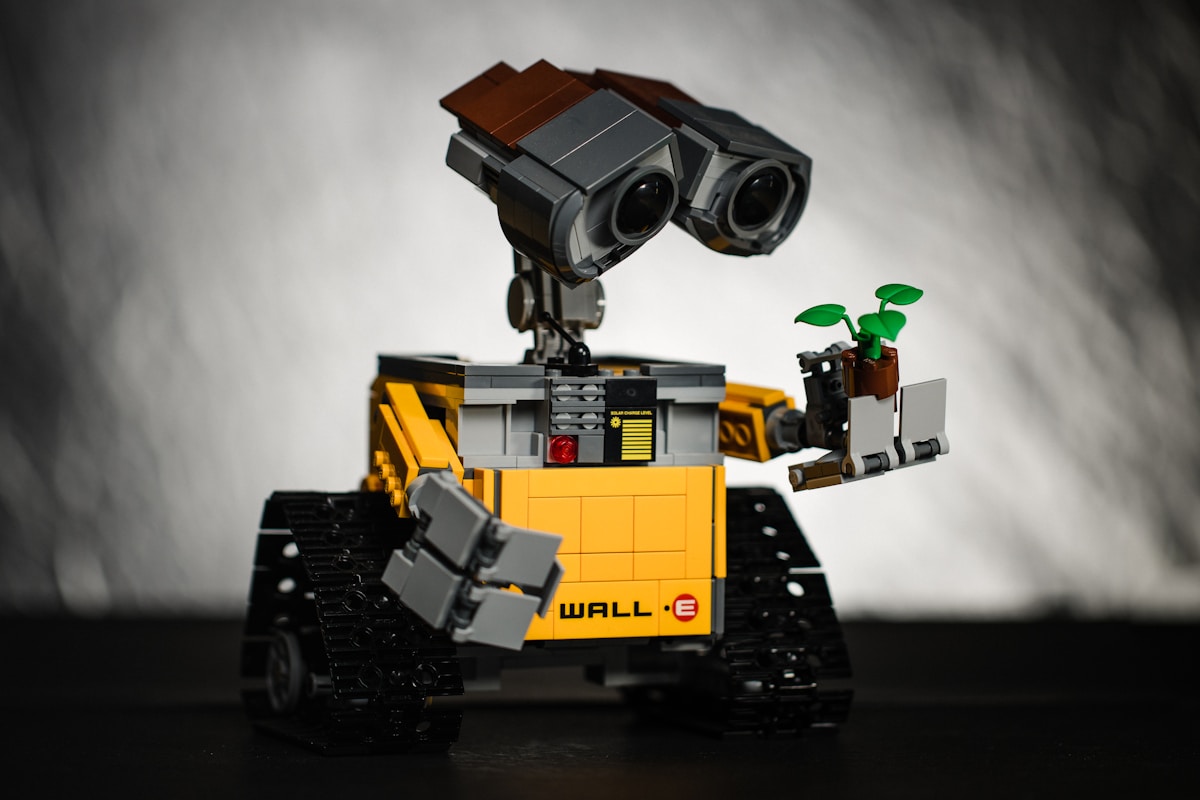
Google DeepMind announced Gemini Robotics-ER 1.6 in mid-April 2026, introducing a major update to its embodied AI stack. The release is focused on improving how AI systems interpret physical environments and execute practical tasks with higher precision. In simple terms, it is a step toward AI that can reason more reliably in the real world, not just in chat interfaces.
This update arrives at a moment when robotics teams are racing to close the gap between perception and action. While many models can describe scenes well, production robotics still struggles with fine-grained understanding under messy real-world conditions. Gemini Robotics-ER 1.6 is positioned as an answer to that gap by tightening spatial reasoning, object-level interpretation, and actionable decision quality.
What Changed in This Release
The April 2026 update emphasises stronger embodied reasoning rather than just broader language capability. Based on public launch details, the model is designed to better handle situations where a system must observe, interpret, and then perform in physical space.
- Improved spatial and relational reasoning for physical tasks.
- Better understanding of instruments and structured visual signals.
- More reliable perception-to-action behaviour in robotics-oriented workflows.
- Developer-facing availability through standard model access channels.
Why this matters: Embodied AI progress is increasingly about consistency and control. Incremental reliability gains often have bigger real-world impact than flashy benchmark jumps.
Why Developers and Teams Should Care
For engineering teams, this launch signals that foundation model progress is moving deeper into operations, robotics, and industrial workflows. As embodied models improve, software teams can design applications where AI does more than generate text — it can assist with inspection, manipulation planning, and environment-aware automation.
This does not mean general-purpose robots are solved. But it does suggest a practical near-term trend: mixed systems where LLM-style reasoning and robotics-specific perception modules work together. Companies building warehouse automation, manufacturing QA, or field operations assistants may be among the first to benefit.
Practical Implications for Product Builders
- Expect more APIs that combine vision reasoning with execution logic.
- Evaluation will shift toward task success rate, not only language quality.
- Safety, guardrails, and human override design become first-class concerns.
- Data pipelines for sensor and spatial context will matter more than prompt tuning alone.
Bottom Line
Gemini Robotics-ER 1.6 reflects a broader 2026 trend: AI models are becoming more useful where software meets physical systems. For readers following the AI industry, this is an important signal that embodied intelligence is entering a more practical, deployment-focused phase. The next wave of innovation will likely come from teams that combine model capability with strong systems engineering and safety-first product design.
Source note: This article is an editorial summary and rephrasing based on public April 2026 announcement materials from Google DeepMind.